What is a Data Protection Officer (DPO)?
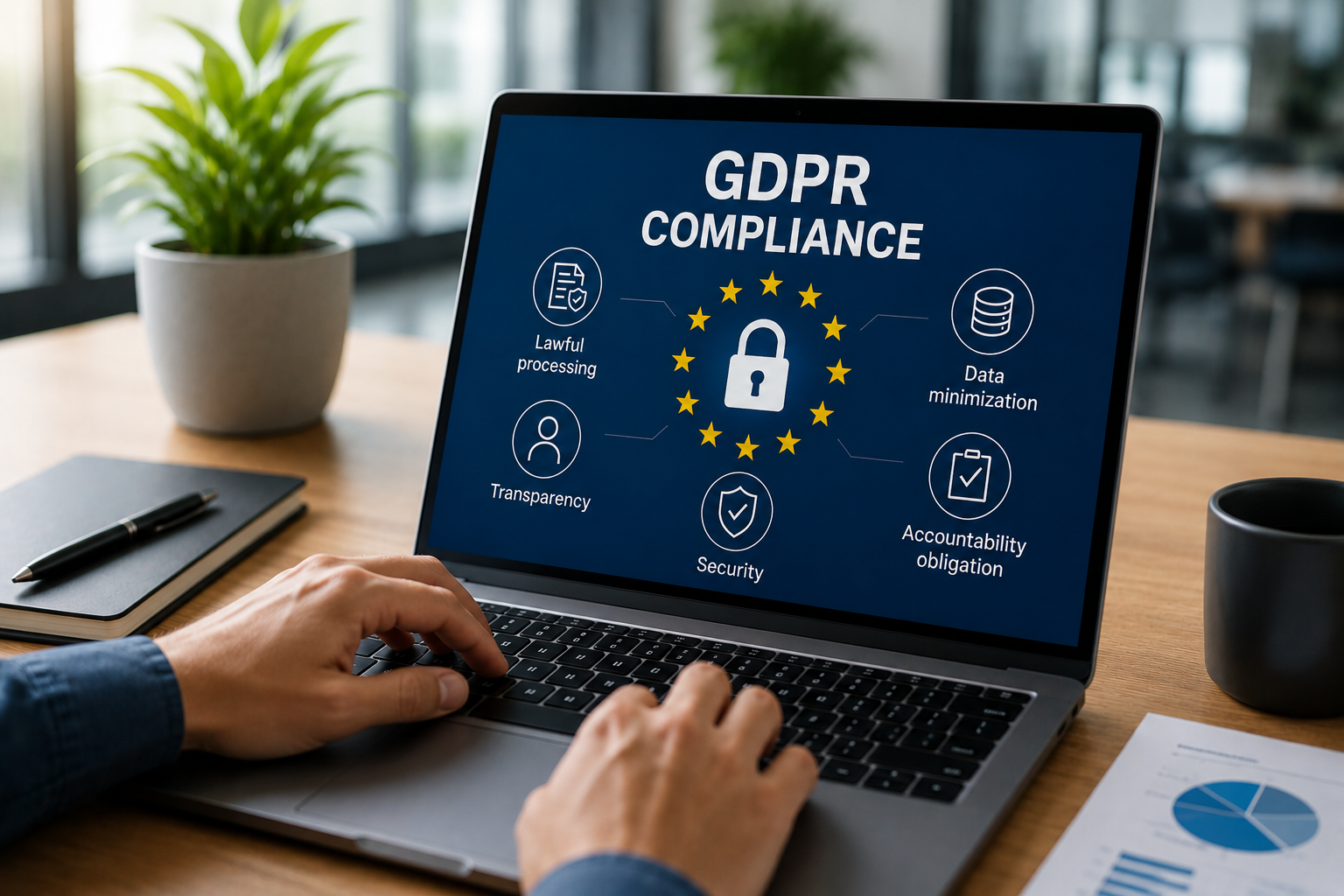
Organizations process personal data of customers, employees, and other stakeholders every day. The General Data Protection Regulation (GDPR) sets requirements for how organizations handle this data. But who oversees compliance with these privacy rules within an organization?
This is where the Data Protection Officer (DPO) plays an important role. A DPO independently monitors compliance with privacy legislation, provides advice on data protection, and helps organizations identify privacy risks in a timely manner.
But what exactly does a Data Protection Officer do? When is appointing a DPO mandatory? And what is the difference between an internal and external DPO? In this article, we explain the role of the DPO and what organizations need to keep in mind.
What does a Data Protection Officer do?
A Data Protection Officer (DPO) is an independent supervisor within or for an organization who monitors compliance with the GDPR and other relevant data protection regulations. The position is referred to in English as Data Protection Officer (DPO).
The DPO advises the organization on privacy legislation, checks whether personal data is being processed correctly, and acts as a point of contact for the Dutch Data Protection Authority (Autoriteit Persoonsgegevens).
The role of a DPO is defined in Articles 37, 38, and 39 of the GDPR. These articles outline the conditions for appointing a DPO, their independent position, and their legal duties.
An important distinction is that the DPO monitors and advises, but is not ultimately responsible for GDPR compliance. That responsibility remains with the organization itself.
What are the duties of a Data Protection Officer?
A Data Protection Officer has several legal duties. These focus on monitoring, advising, and promoting awareness regarding privacy and data protection.
1. Monitoring compliance with the GDPR
The DPO checks whether the organization complies with the GDPR and internal privacy policies. In doing so, the officer looks not only at the existence of policies and procedures but also at their practical application.
This may involve, for example, the DPO investigating whether privacy responsibilities are clearly assigned, whether employees handle personal data with care, and whether existing control measures are functioning effectively.
2. Advising on privacy legislation
A Data Protection Officer informs and advises management and employees about their obligations regarding data protection.
For example, when an organization introduces new technology, wants to share personal data with external parties, or modifies existing processes.
The DPO helps to identify privacy risks and provides independent advice on appropriate measures.
3. Advising on DPIAs
For processing operations that are likely to result in a high privacy risk, an organization must conduct a Data Protection Impact Assessment (DPIA) in advance.
The DPO provides advice, when requested, on the execution of this assessment and monitors its implementation. In doing so, the DPO can advise on the chosen methodology, the identified risks, and the proposed measures.
The responsibility for conducting the DPIA and making decisions remains with the organization.
4. Maintaining contact with the Data Protection Authority
The Data Protection Officer acts as the point of contact for the Data Protection Authority. This applies, among other things, to questions about data processing and consultation with the supervisory authority.
In addition, the DPO can act as a point of contact within the organization for data subjects who have questions about the processing of their personal data or the exercise of their privacy rights.
5. Promoting privacy awareness and compliance
In addition to statutory supervisory and advisory tasks, the DPO contributes to raising awareness about data protection.
This includes identifying training needs, advising on internal privacy training, and highlighting recurring privacy risks.
An effective DPO therefore looks beyond mere legal obligations. The role helps organizations to make privacy a structural part of their operations.
When is a Data Protection Officer mandatory?
Not every organization is required to appoint a Data Protection Officer. Article 37 of the GDPR describes three situations in which this is mandatory.
A DPO is mandatory in any case when:
- The processing is carried out by a public authority or body. This excludes courts acting in their judicial capacity.
- The core activities consist of large-scale, regular, and systematic monitoring of individuals. For example, when the structural monitoring of individuals forms an essential part of the service provision.
- Core activities consist of the large-scale processing of special categories of personal data or personal data relating to criminal convictions and offenses. Consider, for example, organizations where the large-scale processing of health data is central.
Specific legislation may also contain additional obligations.
When is there large-scale processing?
The GDPR does not specify fixed numbers of personal data or data subjects that automatically qualify processing as large-scale.
The assessment takes into account factors such as the number of data subjects, the volume and types of data, the duration of the processing, and the geographical scope.
Therefore, it is important not to look solely at the size of the organization. The nature of the activities and the way in which personal data are processed also determine whether a DPO is mandatory.
Can a DPO also be appointed voluntarily?
Yes. Even when an organization is not legally required to appoint a DPO, it may choose to do so voluntarily.
This can be valuable when privacy issues become more complex, multiple departments process personal data, or there is a need for independent oversight.
Please note: when an organization voluntarily designates someone formally as a DPO, the same GDPR requirements for the position and duties of the DPO generally apply as in the case of a mandatory appointment.
What is the difference between a Data Protection Officer and a Privacy Officer?
The terms Data Protection Officer and Privacy Officer are frequently used interchangeably. However, the roles differ in terms of responsibilities and positioning.
A Data Protection Officer has a legally defined, independent oversight and advisory role. The DPO assesses compliance with privacy legislation and reports directly to the highest management level.
A A Privacy Officer (PO) typically focuses on the practical implementation and coordination of privacy tasks. This includes maintaining the register of processing activities, supporting DPIAs, drafting procedures, and guiding privacy-related issues.
The exact scope of the Privacy Officer role can vary per organization.
Both roles can complement each other well. While the Privacy Officer assists with the day-to-day implementation of privacy measures, the DPO provides independent oversight and advice on compliance.
What requirements must a Data Protection Officer meet?
A DPO must possess sufficient expertise in privacy legislation and its practical application.
The GDPR does not prescribe a specific education or certification. However, an officer must be appointed based on professional qualities, expert knowledge of data protection law and practice, and the ability to perform the statutory duties.
In addition, there are important conditions regarding the DPO's position.
Independence and conflicts of interest
The DPO must be able to perform their duties independently. The organization may not provide instructions regarding the substantive execution of the statutory DPO tasks.
Furthermore, the DPO may not be penalized or dismissed for performing these duties.
A DPO may perform other tasks, provided they do not lead to a conflict of interest. For example, it is generally problematic if someone simultaneously determines the purposes and means of personal data processing and is also required to independently oversee those decisions.
Access to information and management
The DPO must be involved in a timely manner in all issues relating to the protection of personal data.
To this end, the organization must provide sufficient resources, access to relevant information, and support.
Moreover, the DPO reports directly to the highest management level. This ensures that privacy risks and recommendations can be discussed at the appropriate level.
Can a Data Protection Officer be appointed internally or externally?
An organization can choose to appoint a Data Protection Officer internally or have the role filled by an external specialist. Both options are permitted under Article 37 of the GDPR.
Which approach is most suitable depends on factors such as available expertise, the complexity of data processing, and the required capacity. In both cases, the DPO must be able to function independently and possess sufficient expertise.
Would you like to know more about outsourcing this role? Take a look at our DPO-as-a-Service service.
When is an external DPO a suitable choice?
An external DPO can add particular value when:
- The organization lacks sufficient internal DPO expertise.
- There is a need for independent and structural oversight.
- Privacy issues are becoming more complex and require specialist knowledge.
- Continuity and clear agreements regarding the fulfillment of the DPO role are important.
The choice between an internal or external DPO ultimately depends on the organization, the data processing activities, and the available resources.
Outsource your Data Protection Officer to DPO Consultancy
A Data Protection Officer plays a vital role in independently assessing and improving compliance with privacy legislation. However, not every organization has the internal capacity or expertise to fulfill this role effectively.
DPO Consultancy supports organizations with DPO-as-a-Service: the external provision of a Data Protection Officer, tailored to the organization and its specific privacy challenges.
Our privacy professionals combine expertise in GDPR with a practical approach. We make privacy issues understandable, identify risks, and provide independent advice that allows organizations to make targeted improvements.
This gives your organization access to specialist DPO expertise without the need to establish a full-time internal position.
Want to know more about filling the DPO role?
Discover how DPO Consultancy can support your organization with an external DPO.